
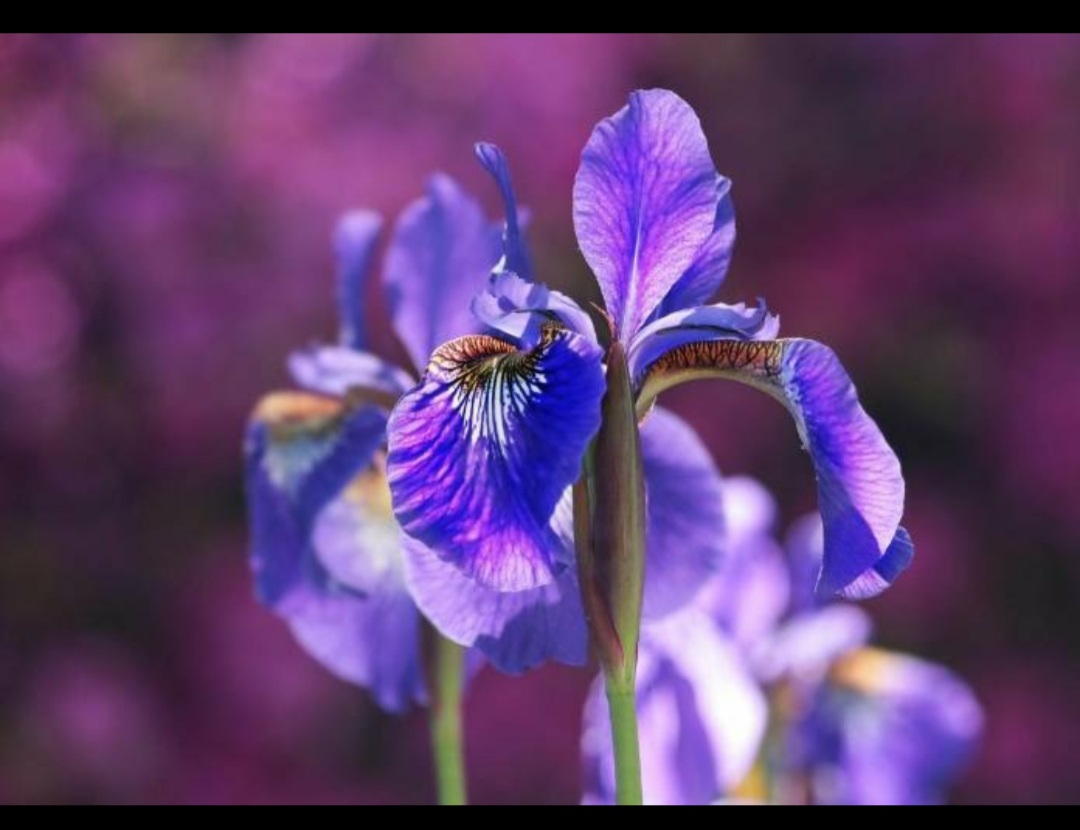
The tall, beautiful iris, named after the Greek goddess who rode rainbows, comes in many magical colors. Despite its divine origins, this June bloomer is rugged, reliable, and easy to grow. Learn all about planting, growing, and caring for iris flowers.
There are some 300 species in the genus Iris. The most familiar irises are the tall (at least 28 inches) bearded irises (Iris germanica).
These distinctive six-petaled flowers have three outer hanging petals (called “falls”) and three inner upright petals (called “standards”).
Irises may be a “bearded” type or crested (“beardless”). Bearded iris are so-called because they have soft hairs along the center of the falls. In crested iris, the hairs form a comb or ridge.
Most irises flower in early summer. Some—mostly bearded hybrids—are remontant, flowering again later in the summer.
Irises attract butterflies and hummingbirds, and make lovely cut flowers. For iris companions in the garden, look to roses, peonies, and lilies.
When to Plant Irises
Plant irises in late summer to early fall, when nighttime temperatures remain between 40 and 50 degrees Fahrenheit or above. This gives them plenty of time to get established before the coming winter. The tall bearded iris varieties are best planted closer to fall because they go dormant in early to mid-summer.
If you receive bare rhizomes or irises in a container at some point earlier in the year, go ahead and plant them as soon as convenient. It’s better to get them in the ground rather than wait until the ideal time.
Choosing and Preparing a Planting Site
Irises will bloom best in full sun. They can tolerate as little as half a day of sun, but it’s not ideal. Without enough light, they won’t bloom.
Bearded irises must not be shaded out by other plants; many do best in a special bed on their own.
They prefer fertile, neutral to slightly acidic soil. Learn more about preparing soil for planting and organic soil amendments.
Good drainage all year-long is very important; irises prefer “wet feet, but dry knees.” They will not tolerate wet soil in wintertime.
Loosen the soil with a tiller or garden fork to a depth of 12 to 15 inches, then mix in a 2- to 4-inch layer of compost.
How to Plant Irises
For bare-root irises, plant the rhizome horizontally with the top exposed. In climates with hot summers, plant the rhizome just below the soil surface.
Plant rhizomes singly or in groups of three, 1 to 2 feet apart, depending on the size.
Dig a shallow hole 10 inches in diameter and 4 inches deep. Make a ridge of soil down the middle and place the rhizome on the ridge, spreading roots down both sides. Fill the hole with soil and firm it gently, leaving part of the rhizome and the foliage uncovered.
Tip: It’s easy to make the mistake of planting irises too deeply. The rhizomes of these plants should be partially exposed to the elements, or thinly covered with soil in hot climates. If they’re buried too deeply, they won’t do well.
Do not mulch around the rhizome as this practice may encourage rot.
Water thoroughly.